

Is your SaaS website a ghost town?
A few tourists come by, but nobody seems to stick around.
Or maybe they stick around, but they’re sightseeing—not buying.
What went wrong?
To be honest … probably a handful of things.
But today, you’re going to learn how to turn that around with a little method known as conversion marketing.
We’ll cover:
- What is conversion marketing?
- 1. Deeply understand your ideal customer
- 2. Create an emotional journey
- 3. Craft “bridge content”
- 4. Be noteworthy
- 5. Don’t induce banner blindness
What is conversion marketing?
Conversion marketing is a digital marketing strategy focused on encouraging prospects to take actions that bring them closer to a sale.
While conversion marketing is a new term that’s come into play in the world of digital advertising, it traces its roots back to old-time advertising techniques.
Effective conversion marketing requires three mindset shifts that set it apart from run-of-the-mill campaigns.
1. Results above anything else. This takes a look at the advertising greats of the Mad Men generation. To quote Rosser Reeves of the Ted Bates Agency:1
Now, what do you want out of me?
Fine writing?
Do you want masterpieces?
Do you want glowing things that can be framed by copywriters?
Or do you want to see the goddamned sales curve stop moving down and start moving up?
To paraphrase UCLA coach Red Sanders, in the world of conversion marketing, results aren’t everything. They’re the only thing.
2. Focus on big wins. You’ve read about the classic A/B tests, like Google’s experiments with 41 hues to find the most clickable blue.
Unless you’re Google, ignore that thinking. Focus on what matters. The Big Wins.
Don’t waste time on button colors, focus on major differences in copy, content, and focus.
3. Constant improvement. The life of a conversion marketer is one in constant motion. Constantly improving. Remember—there is always a chance to improve.
Enough theory.
Let’s dive into the most powerful ways you can increase conversions on your website.
Please note—these are very different than what you’ll read just about anywhere online. That’s because I’m obsessively focused on what works, not just some fun hacks.
Enough of the little league stuff.
1. Deeply understand your ideal customer
This, my friends, is the #1 make-or-break moment in your conversion efforts.
If your website understands and speaks to the customer, conversion will be easy. If you’re missing the mark, no amount of revisions or tweaks will change it.
And when I say “speak,” I mean everything on your site—sales pages, videos, articles, design, and especially your offers themselves.
To prove it, let’s see the extreme.
Here are two very different SaaS company websites. AdEspresso sells ad management and markets to hip entrepreneurs and ad agencies.
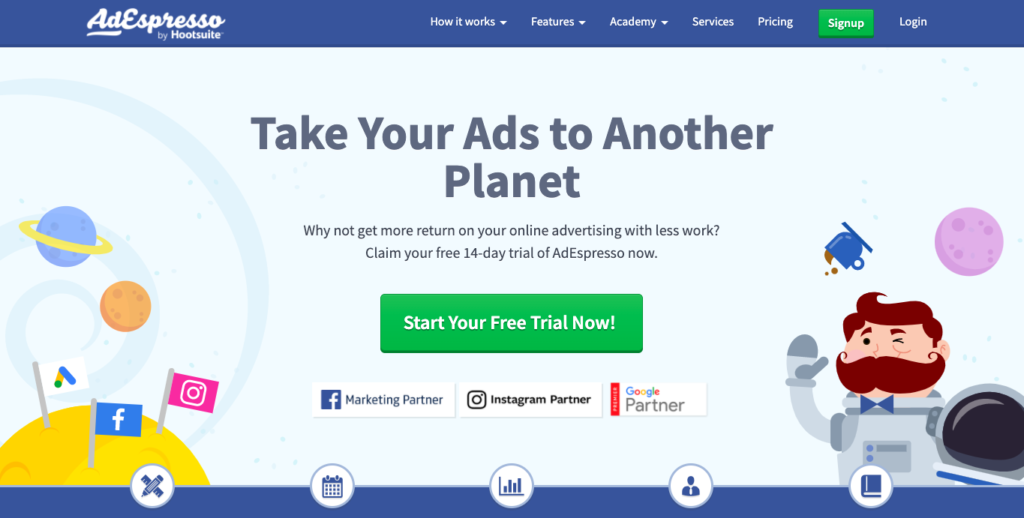
Athennian markets to lawyers. They sell legal entity management (I’ll be honest and admit I have no idea what that is).
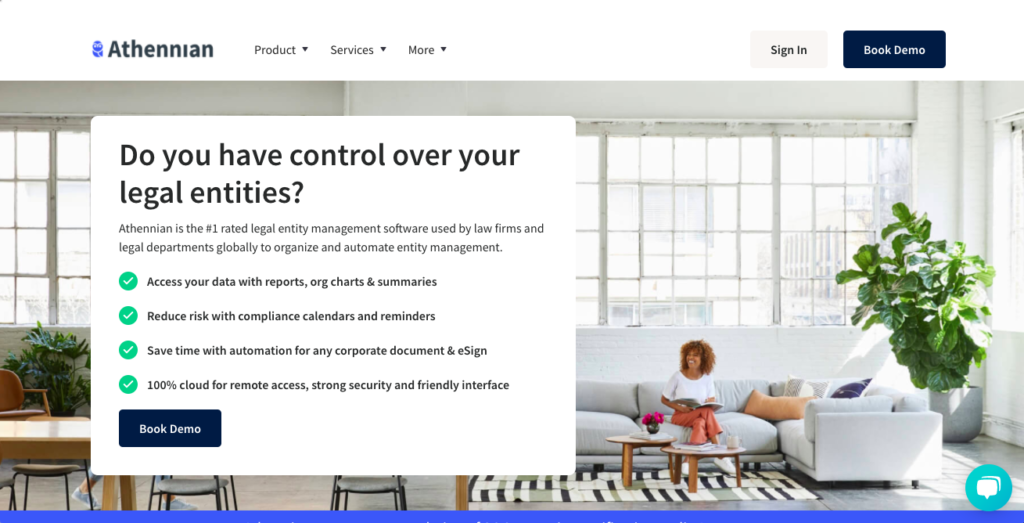
Simple enough.
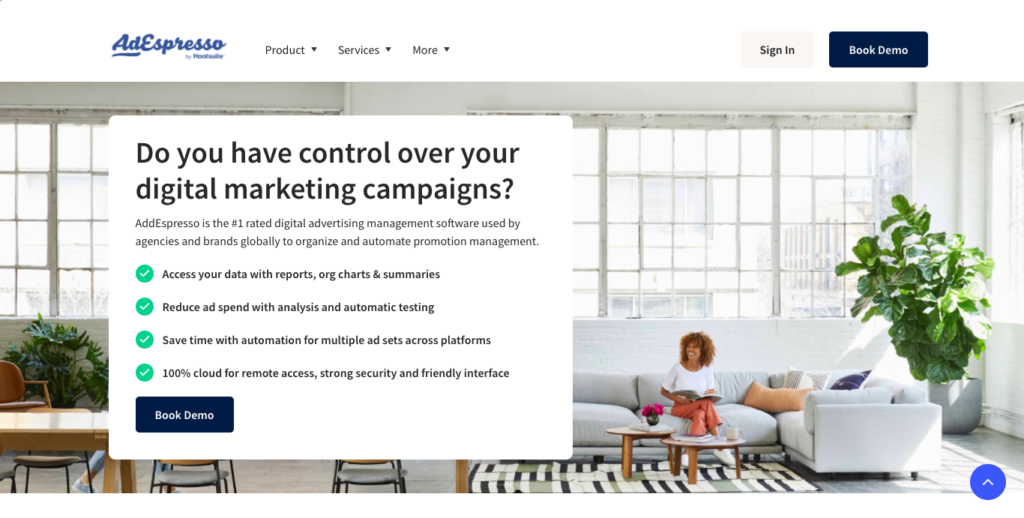
But to make things interesting, let’s do a face swap, SaaS-style.
How many hip ad agency leads do you think AdEspresso would get if their site looked like this?
And how many lawyers would take Athennian seriously if this was their homepage?
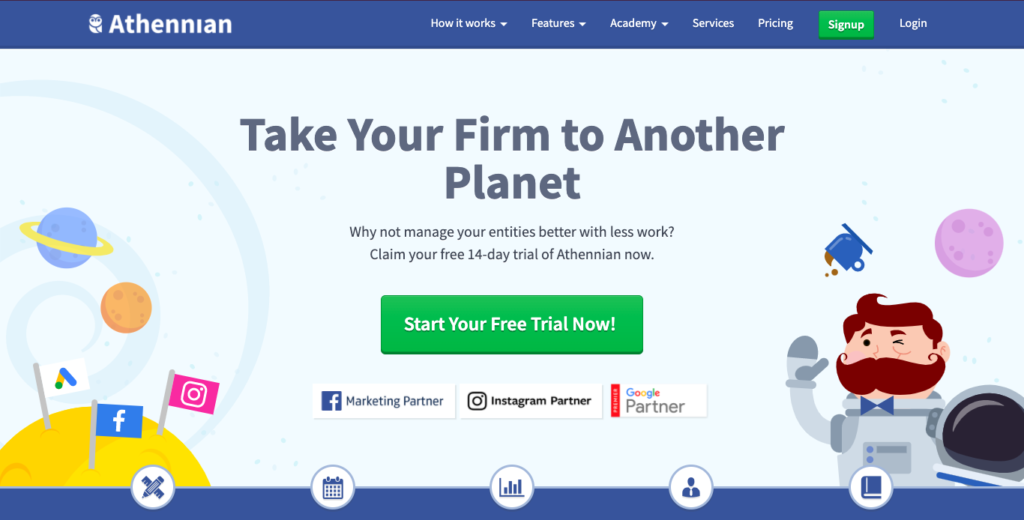
See? Understanding the customer must underlie all marketing efforts.
Most marketers then try to fix this with a profile that lists out demographic details like age, income, interests, and the like.
There’s nothing wrong with that, but here’s a little secret:
People don’t buy based on demographics, they buy based on wants and needs.
Entrepreneurs get this, which is why an entrepreneur’s model is very different from the marketer’s model.
Here’s an example from a fantastic video by Strategyzer, using Tesla as an example:
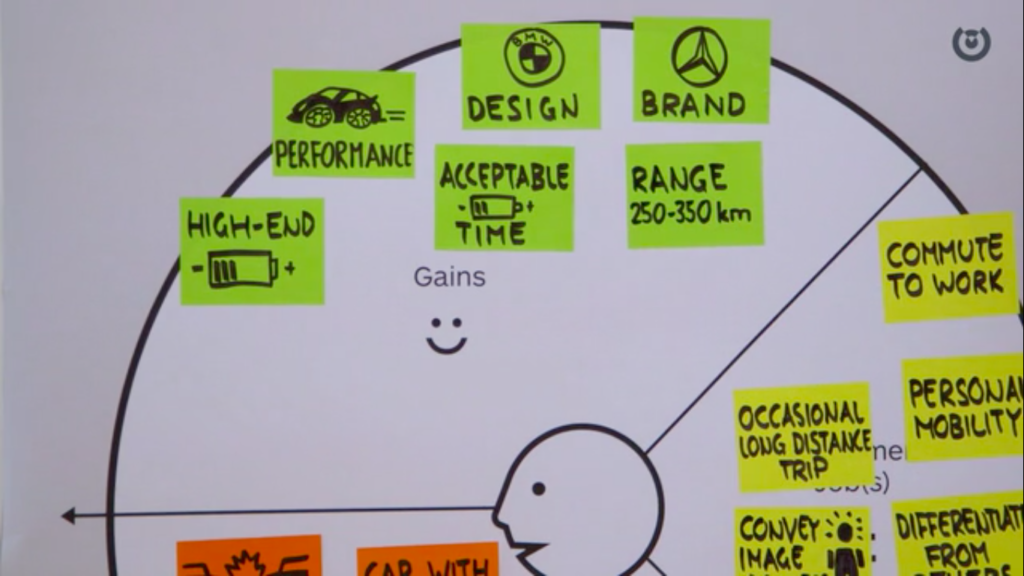
As a conversion marketer, which of these profiles best helps you sell?
- Age 30-45
- $100,000 annual income
- Lives in a large city
- Interested in sustainability
- Wants a high-end, brand-name vehicle
- Mostly commutes with the occasional long-distance trip
- Wants to convey a lifestyle and differentiate themself
Clearly, the second one—with emotions, not facts. (We’ll get to why emotions matter in a minute.)
The absolute best way I know to do this is to pretend you’re doing all this for a real person who fits your demographic perfectly.
2. Create an emotional journey
There’s a great quote from screenwriter Blake Snyder2:
[W]ringing out the emotions of the audience is the name of the game. Making it an emotional experience, using all the emotions, is what it’s about.
That’s from his book Save the Cat, where he explains how to write great movie screenplays.
Movies and marketing are very different. But they’re similar in an important way—each element must create an emotional journey.
And for conversion marketing, an emotional journey is one of the most important things you can create.
Of course, it’s not easy. But a customer journey is more than just a Kanban board in your CRM.
They are stages of emotion.
And no, it’s not sad without your product, then happy with your product.
Emotions are more complex than that.
Researcher Brene Brown has found these 30 specific emotions:
- Anger
- Anxiety
- Belonging
- Blame
- Curiosity
- Disappointment
- Disgust
- Embarrassment
- Empathy
- Excitement
- Fear
- Frustrated
- Gratitude
- Grief
- Guilt
- Happiness
- Humiliation
- Hurt
- Jealousy
- Joy
- Judgment
- Loneliness
- Love
- Overwhelmed
- Regret
- Sadness
- Shame
- Surprise
- Vulnerability
- Worry
Every customer journey is different. And the emotions could be any of the above.
Let’s take a quick tour of some dictionary-word billion-dollar SaaS companies and see what their emotional journeys are.
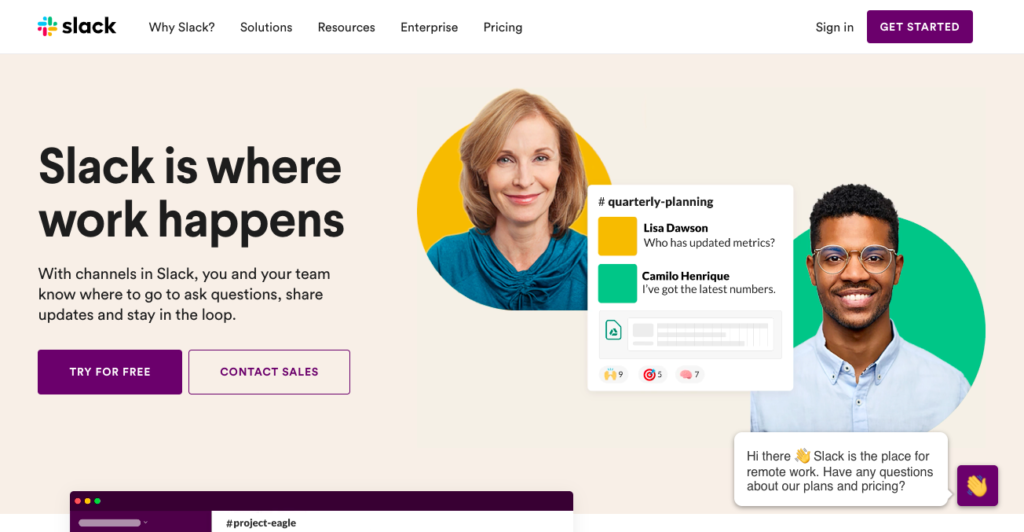
Slack is using positive language here, but they’re answering these emotions:
- “You and your team know where to go” — Frustration
- “Stay in the loop” — Overwhelm, anxiety
I’d say they’re also hinting at belonging as well, both in the subtext as well as the imagery.
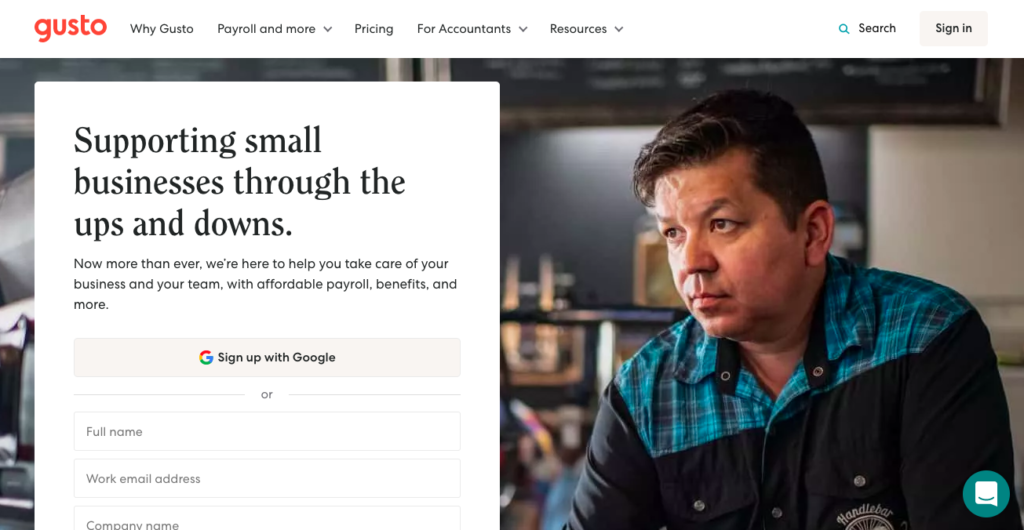
Gusto has a special COVID-19 page up. This one is easy:
- “Supporting small businesses” — Belonging
- “through the ups and downs” — Anxiety, fear
- “Here to help you take care of your business and your team” — Guilt, worry
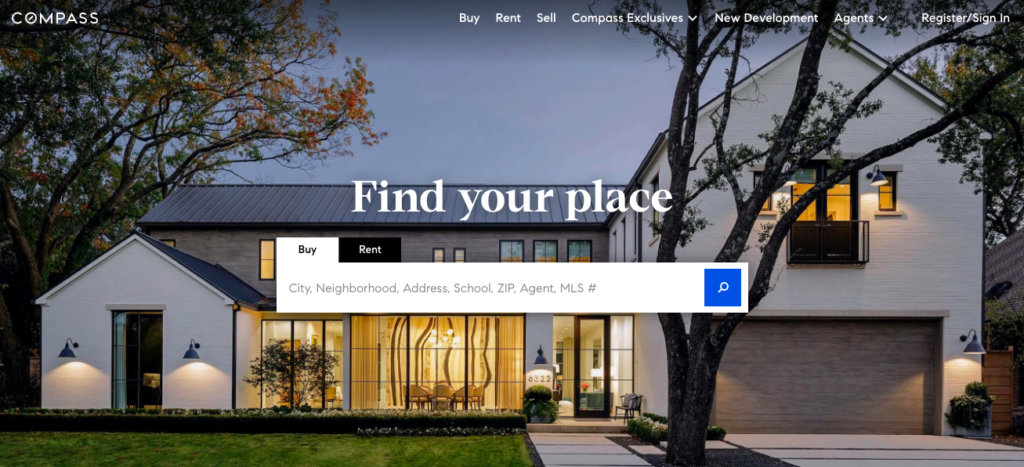
Compass only has three words on their home page—“find your place.” It’s practically the definition of belonging.
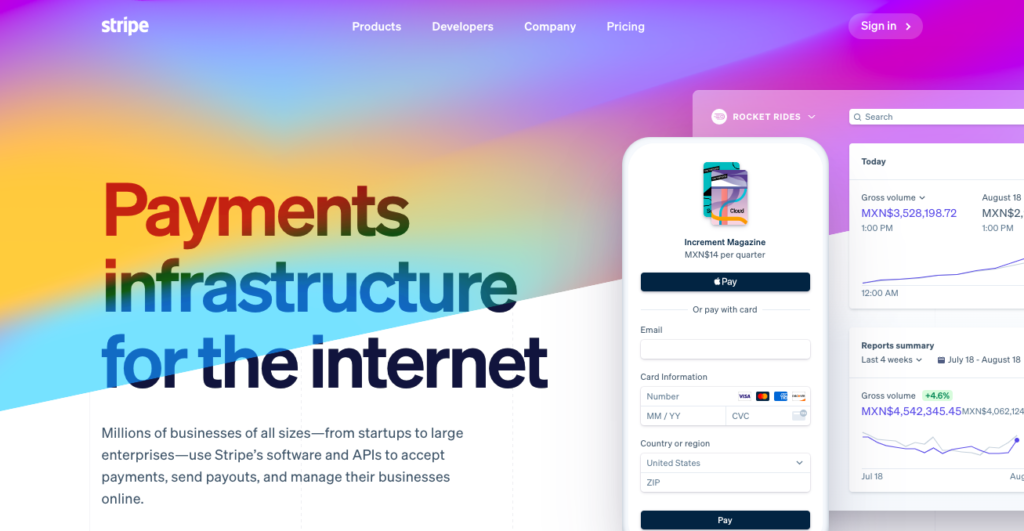
Finally, Stripe:
Animated melting rainbow background — Love, peace, and joy- “Millions of businesses of all sizes” — Belonging
- “Accept payments, send payouts, manage their businesses” — Frustration, overwhelm
There’s also an undeniable subtext of curiosity, since it hints at “what” without much “how.”
The reality is that we make decisions based on emotions, then justify them with reasons.
So by adjusting your customer journey to highlight emotion, you can dramatically shift conversions with a movie-like emotional roller coaster.
Which brings me to how to do it.
3. Craft “bridge content”
Everything you create for your customer journey—ads, videos, email sequences, content, and the rest—should serve as a bridge to the next action-driving emotion.
Looking back to the world of film, this is one of the biggest differences between great and terrible movies.
In great movies, each scene develops the emotional journey of the characters a bit more.
When you adjust for inflation, Gone with the Wind is the highest-grossing film of all time, beating ever superhero movie with a sky beam at the end.
It’s also considered one of the greatest movies ever made.
Why? Because it transports us from one emotion to another, in every single scene.
Every scene ends with a character—or the viewer—feeling something different than when the scene began.
Compare that with The Room, widely considered one of the worst movies ever made.
It’s easy to point out the terrible writing, acting, directing, filming, editing, and plot.
But if you read expert reviews on the movie, you’ll notice their biggest beef is the massive number of scenes that go absolutely nowhere.
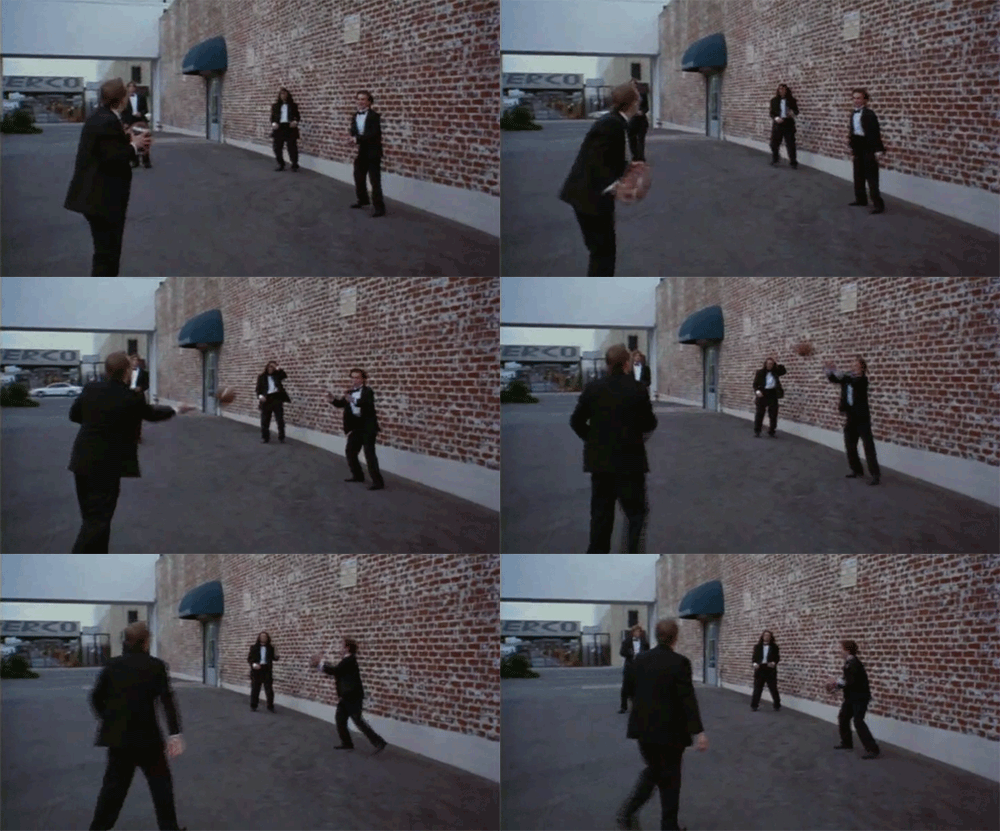
Like this scene, where all the male characters put on tuxedos, play a round of toss football, then go back inside.
(If you don’t believe me, just watch the actual scene.)
The characters start and end the scene with basically the same emotion—“Isn’t it fun to dress up and play sports?”
Like a great movie, each element of your marketing needs to focus on the next emotion.
So, you introduce prospects to an article that echoes their anger and frustration.
That article suggests an ebook which explains their deeper fear and arouses curiosity.
They sign up for a live webinar that provides a sense of belonging, which becomes a free trial that gives a sense of happiness.
See how that works?
Now, for the tough questions …
Do your marketing assets move along the prospect’s emotional journey?
Or are they just endless rounds of tuxedo football?
4. Be noteworthy
Years ago, when I was living with my parents, one of my biggest goals was to Get Fit.
Yet this was a continual struggle, it seemed, no matter how hard I went to the gym or how many protein shakes I drank.
Then one day, I stumbled across a little website called Stronglifts.
The author, Medhi, said that the reason you struggled to Get Fit was because you were doing machines and light weights.
The secret—what real bodybuilders and strongmen knew for generations—was heavy barbell exercises that used dozens of muscles at once, like deadlifts and bench presses instead of leg presses and bicep curls.
I read the book in one day.
I told my mom about it.
I signed up for his list, did his program, and downloaded his app.
I forced my poor brother to suffer through it with me at the gym.
I convinced a friend to start the program, and even secretly helped his parents pick out the right equipment to give him on his birthday.
Today, many years later, I consider myself in the best shape of my life and I’m still doing my deadlifts, although right now they’re in the back yard (thank you, COVID-19).
In short, Medhi’s marketing changed my life. And it started on the day I found his site.
That day—for the whole week, in fact—it was all I could think about.
The term “conversion” in a comes from the Latin “convertere,” to turn around or transform.
It’s used in religious circles for when someone joins a religion.
And that day, I converted in the truest sense. The button could have been any color—I was saying yes to everything Medhi asked me to do.
I had joined what Russell Brunson calls a “Cult-ure,”3 a group of irrationally dedicated followers built around a new opportunity.
His new idea—barbell lifting—encouraged my dream, shifting my thinking, and was the most memorable thing I read all day.
So, now to what you’re creating.
Is your content the ONE thing your reader will remember today? This week?
Or is it as forgettable as what everyone else creates?
5. Don’t induce banner blindness
This last tip in the list is one of the few that most people focus on when talking about conversion marketing.
And yet, my advice is going to be different than what most “experts” say.
You’ll read a lot about where and how to place boxes to encourage conversions.
But this is a strategy I fail to understand, because of banner blindness.
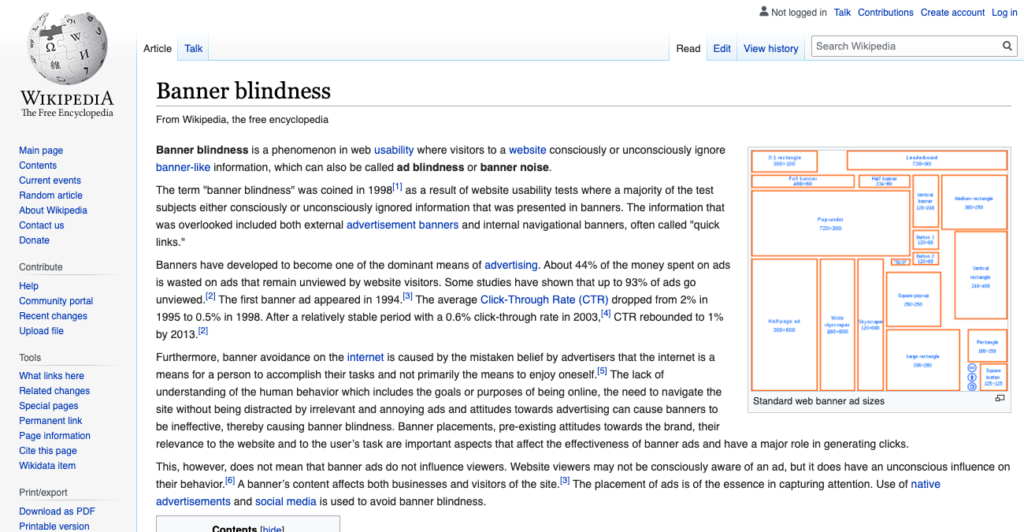
Banner blindness is our tendency to ignore things that look like ads. It’s a term coined in 1998, and it even has its own giant Wikipedia page:
In fact, the main focus of conversion marketing today isn’t on increasing conversions on ads—rather, increasing conversions on our own websites.
The marketing world has realized we can avoid banner blindness by getting people on our own websites.
But then we clutter our websites with the very type of content people ignore—ads!
Take a look at this call-to-action block on a SaaS website I found.
(I’ve pixelated images and lorem-ipsum-ified the text to protect … the guilty.)
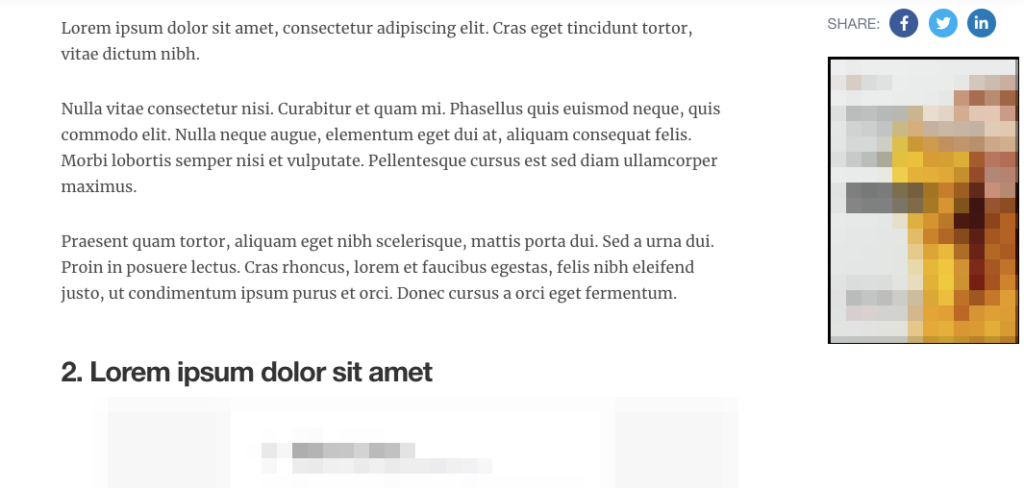
That block to the right is a call to action for their product. Does it not look exactly like an ad? The location, size, design, and even the text scream that it is to be ignored.
So, how can we get people to click on what they’ve been trained to ignore since the dawn of the internet?
Simple.
Your call to action must tie into your premise. It must be part of the content from the beginning.
It’s not a complex process to understand the user and build in a call to action through the copy that encourages more conversions.
I personally think of that process in five steps:
- Learn their true need
- Answer their true need
- Bridge to a deeper desire
- Present an offer tied to the deeper desire
- Close the conversion
None of them is difficult. And in just a few hours, any SaaS marketer can use those steps to double conversions on a popular piece of content.
In fact, I prepared a detailed explanation of each step (plus a bonus sixth step) that details how to go about it.
Footnotes
1 – Ogilvy, David. Ogilvy on Advertising. Pan Books, 1984. pp. 24
2 – Snyder, Blake. Save the Cat!: the Last Book on Screenwriting You’ll Ever Need. M. Wiese Productions, 2005. pp. 152
3 – Brunson, Russell. Expert Secrets. Morgan James Publishing LLC, 2017. Pp. 3
First published: August 24th, 2020
Last revised: August 25th, 2020
Next scheduled review: September 25th, 2020